
Featured Article
Compliance
Navigating the Complex World of Compliance with ConversAI
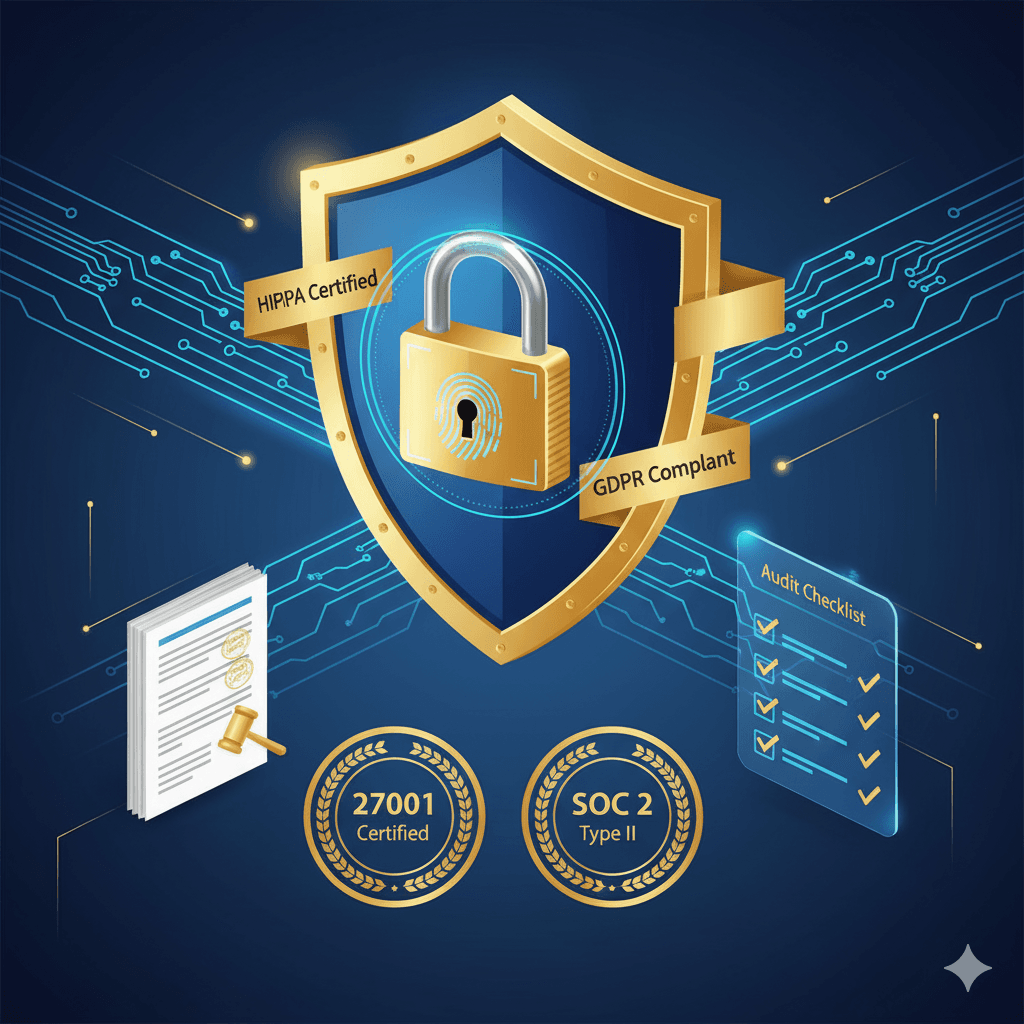
Compliance isn't just a box to check—it's the bedrock of trust and sustainability in today's business landscape. Ignoring compliance exposes your organization to significant risks, from crippling fines to irreparable reputational damage. That's why businesses rely on ConversAI Labs. We build compliance into the very core of our AI voice agents, offering enterprise-grade security and adherence to the strictest regulatory standards.
We understand the complexities of navigating the regulatory environment. ConversAI is designed to comply with major regulations like HIPAA, GDPR, PCI DSS, CCPA, and SOC 2. This guide provides an overview of these crucial standards and explains how ConversAI helps you stay compliant, allowing you to focus on what matters most: growing your business and serving your customers.
In this guide, you'll learn:
The importance of compliance and the consequences of non-compliance.
An overview of major regulations like HIPAA, GDPR, PCI DSS, CCPA, and SOC 2.
How ConversAI ensures compliance with these regulations.
Checklists and best practices for maintaining compliance.
The shared responsibility model and your role in compliance.
The Compliance Landscape: A Bird's-Eye View
The regulatory landscape is complex and ever-evolving. Understanding the major regulations impacting your business is critical for success. Here's a brief overview of some key standards:
Major Regulations:
HIPAA (Health Insurance Portability and Accountability Act): Protects patient health information (PHI). Penalties for violations can reach up to $1.5 million per incident.
GDPR (General Data Protection Regulation): Safeguards the data of EU citizens, regardless of where your company is located. Non-compliance can result in fines of up to 4% of your annual global revenue.
PCI DSS (Payment Card Industry Data Security Standard): Protects credit card data and is mandatory for all businesses that process card payments. Failure to comply can lead to fines and the loss of payment processing privileges.
CCPA (California Consumer Privacy Act): Grants California consumers specific rights regarding their personal information. Violations can incur penalties of up to $7,500 per incident.
SOC 2 (Service Organization Control 2): Establishes trust service criteria for data security, availability, processing integrity, confidentiality, and privacy. Often required by enterprise customers as a condition of doing business.
Why Compliance Matters:
Legal Requirement: Compliance with these regulations is not optional; it's the law.
Customer Trust: Demonstrating compliance builds trust and strengthens relationships with your customers.
Competitive Advantage: Compliance can differentiate you from competitors and attract customers who prioritize data security and privacy.
Risk Mitigation: Proactive compliance reduces the risk of costly fines, legal action, and reputational damage.
HIPAA Compliance: Protecting Patient Health Information
What is HIPAA?
The Health Insurance Portability and Accountability Act (HIPAA) is a U.S. law designed to protect Protected Health Information (PHI). It applies to healthcare providers, health insurers, and their business associates (vendors). ConversAI, as a vendor processing data for healthcare organizations, acts as a Business Associate and adheres strictly to HIPAA regulations.
PHI Examples:
PHI encompasses any information that can be used to identify an individual and relates to their health status, healthcare services, or payment for those services. Examples of PHI include:
Patient names
Medical record numbers
Appointment details
Diagnosis information
Treatment plans
Insurance information
HIPAA Requirements:
HIPAA is divided into three main rules:
A. Privacy Rule
The Privacy Rule governs the use and disclosure of PHI. Key principles include:
Minimum Necessary Standard: Limiting the use and disclosure of PHI to the minimum necessary to accomplish the intended purpose.
Patient Consent Required: Obtaining patient consent before using or disclosing PHI for certain purposes.
Limited Use and Disclosure: Using and disclosing PHI only as permitted by HIPAA.
Notice of Privacy Practices: Providing patients with a notice explaining how their PHI will be used and protected.
B. Security Rule
The Security Rule sets standards for protecting the confidentiality, integrity, and availability of electronic PHI (ePHI). It includes three types of safeguards:
Administrative Safeguards: Policies and procedures to manage security, such as risk assessments, security awareness training, and incident response plans.
Physical Safeguards: Physical access controls to protect ePHI, such as facility access controls, workstation security, and device and media controls.
Technical Safeguards: Technology and policies used to protect ePHI, such as access controls, audit controls, and encryption.
C. Breach Notification Rule
The Breach Notification Rule requires covered entities and business associates to notify affected individuals, the Department of Health and Human Services (HHS), and the media (in some cases) following a breach of unsecured PHI. Notifications must be made within 60 days of discovering the breach.
How ConversAI Ensures HIPAA Compliance:
ConversAI takes HIPAA compliance seriously, implementing a comprehensive set of safeguards to protect PHI:
1. Business Associate Agreement (BAA)
We provide a signed BAA to all healthcare clients, clearly outlining the responsibilities and obligations of both parties under HIPAA. This agreement provides legal protection and ensures compliance.
2. Technical Safeguards
Encryption:
Data in Transit: We use TLS 1.3 to encrypt all data transmitted between our servers and your systems.
Data at Rest: We use AES-256 encryption to protect all data stored on our servers.
End-to-End Encryption: Option available for enhanced security.
Access Controls:
Role-Based Permissions: We implement role-based access control to ensure that only authorized personnel have access to PHI.
Unique User IDs: Each user has a unique ID and password for accessing the system.
Automatic Logoff: Sessions automatically time out after a period of inactivity.
Emergency Access Procedures: Established procedures for accessing data in emergency situations.
Audit Controls:
Complete Logging of PHI Access: We maintain a complete audit trail of all access to PHI.
Tamper-Proof Logs: Our logs are tamper-proof to ensure their integrity.
Regular Audit Reports: We generate regular audit reports to monitor access to PHI.
3. Administrative Safeguards
Security Management Process: We have a comprehensive security management process in place, including risk assessments and security planning.
Assigned Security Responsibility: We have designated security officers who are responsible for overseeing our HIPAA compliance efforts.
Workforce Training: We provide regular security awareness training to our employees.
Incident Response Procedures: We have established incident response procedures for handling security incidents and data breaches.
4. Physical Safeguards
SOC 2 Certified Data Centers: Our data centers are SOC 2 certified, ensuring they meet the highest standards for security and availability.
24/7 Monitoring: Our data centers are monitored 24/7 for security threats.
Biometric Access Controls: We use biometric access controls to restrict physical access to our data centers.
Disaster Recovery: We have a comprehensive disaster recovery plan in place to ensure business continuity in the event of a disaster.
5. PHI Handling
Automatic PHI Detection: Our system automatically detects PHI in voice interactions.
Redaction in Transcripts: We offer automatic redaction of PHI in call transcripts.
Secure Storage: PHI is stored securely in encrypted databases.
Controlled Destruction: We have procedures in place for the secure destruction of PHI when it is no longer needed.
Implementation Checklist for Healthcare Clients:
To ensure HIPAA compliance when using ConversAI, healthcare clients should:
✅ Sign a Business Associate Agreement (BAA) with ConversAI.
✅ Configure PHI redaction settings.
✅ Set appropriate access controls for users.
✅ Train staff on security and privacy policies.
✅ Enable audit logging for tracking data access.
✅ Review security settings at least quarterly.
✅ Conduct a risk assessment at least annually.
GDPR Compliance: Protecting EU Citizens' Data
What is GDPR?
The General Data Protection Regulation (GDPR) is a European Union (EU) law that protects the personal data of EU citizens. It applies to any organization that processes the personal data of EU citizens, regardless of where the organization is located. GDPR imposes strict penalties for non-compliance.
Key GDPR Principles:
Lawfulness, Fairness, and Transparency: Data processing must be lawful, fair, and transparent to the data subject.
Purpose Limitation: Data can only be collected for specified, explicit, and legitimate purposes.
Data Minimization: Only collect data that is necessary for the intended purpose.
Accuracy: Data must be accurate and kept up to date.
Storage Limitation: Data should be kept for no longer than necessary.
Integrity and Confidentiality: Data must be processed securely, protecting against unauthorized access, alteration, disclosure, or destruction.
Accountability: Data controllers are responsible for demonstrating compliance with GDPR.
Individual Rights Under GDPR:
GDPR grants individuals several rights regarding their personal data, including:
Right to Access: The right to know what personal data is being processed and to obtain a copy of that data.
Right to Rectification: The right to correct inaccurate or incomplete personal data.
Right to Erasure ("Right to be Forgotten"): The right to have personal data deleted under certain circumstances.
Right to Restrict Processing: The right to limit the processing of personal data.
Right to Data Portability: The right to receive personal data in a structured, commonly used, and machine-readable format.
Right to Object: The right to object to the processing of personal data under certain circumstances.
ConversAI GDPR Features:
ConversAI offers a range of features to help customers comply with GDPR:
1. Consent Management
Clear Opt-In Mechanisms: Easy-to-understand consent forms.
Granular Consent Options: Allowing users to choose what data they share.
Easy Withdrawal Process: Simple way to revoke consent.
Consent Audit Trail: Maintaining a record of all consents.
2. Data Subject Rights Portal
Self-Service Access Requests: Users can request access to their data.
Download Personal Data: Users can download their data in a common format.
Request Deletion: Users can request the deletion of their data.
Update Information: Users can update their personal information.
30-Day Response Guarantee: We guarantee to respond to data subject requests within 30 days.
3. Data Processing Agreement (DPA)
We provide a Data Processing Agreement (DPA) to all EU customers, outlining our responsibilities as a data processor.
4. Data Minimization
Collect Only Necessary Data: We only collect data that is necessary for the intended purpose.
Configurable Retention Policies: Customers can configure data retention policies to automatically delete data after a certain period.
Automatic Deletion After Period: Data is automatically deleted after the specified retention period.
No Unnecessary Data Storage: We do not store any unnecessary data.
5. International Data Transfers
Standard Contractual Clauses (SCCs): We use SCCs to ensure that data is transferred securely to countries outside of the EU.
EU-Approved Transfer Mechanisms: We only use EU-approved transfer mechanisms.
Data Residency Options (EU Servers): Customers can choose to store their data on servers located in the EU.
6. Privacy by Design
Built-In Privacy Controls: Privacy controls are built into our platform.
Default to Highest Privacy Settings: We default to the highest privacy settings.
Regular Privacy Assessments: We conduct regular privacy assessments to ensure that our platform is compliant with GDPR.
GDPR Compliance Checklist:
To ensure GDPR compliance when using ConversAI, customers should:
✅ Sign a Data Processing Agreement (DPA).
✅ Configure consent collection mechanisms.
✅ Set appropriate data retention policies.
✅ Enable the data subject portal.
✅ Document processing activities.
✅ Appoint a Data Protection Officer (DPO), if required.
✅ Conduct a Data Protection Impact Assessment (DPIA) for high-risk processing.
PCI DSS Compliance: Protecting Credit Card Data
What is PCI DSS?
The Payment Card Industry Data Security Standard (PCI DSS) is a set of security standards designed to protect credit card information. It is required for all businesses that process, store, or transmit cardholder data.
ConversAI PCI Approach:
ConversAI understands the importance of protecting credit card data and implements a comprehensive approach to PCI DSS compliance:
1. No Storage of Card Data
Our AI voice agents are designed *never* to store full credit card numbers. Instead, we utilize immediate tokenization to protect sensitive information and significantly reduce PCI scope.
2. Card Data Handling:
PAN (Primary Account Number) Masking: Card numbers are masked to protect the full PAN.
Last 4 Digits Only Displayed: Only the last four digits of the card number are displayed.
CVV Never Stored: We never store CVV codes.
Expiration Dates Protected: Expiration dates are securely handled and protected.
3. Secure Transmission:
TLS 1.2+ Only: We use TLS 1.2 or higher for all data transmission.
Strong Cryptography: We employ strong cryptographic algorithms to protect data in transit.
Secure Payment Gateway Integration: We integrate with secure payment gateways to process card payments.
4. Compliance Validation:
Annual PCI Assessment: We undergo annual PCI DSS assessments by a Qualified Security Assessor (QSA).
Quarterly Vulnerability Scans: We conduct quarterly vulnerability scans to identify and address security weaknesses.
Penetration Testing: We perform regular penetration testing to simulate real-world attacks and test our security controls.
Compliance Certificate Available: Our PCI DSS compliance certificate is available upon request.
Integration with Payment Processors:
ConversAI integrates with leading payment processors, including:
Stripe
PayPal
Square
Authorize.net
Direct API integration
Tokenization support
Best Practices for Customers:
To further enhance PCI DSS compliance, we recommend the following best practices for our customers:
Use tokenization whenever possible.
Never request the CVV code over the phone.
Redirect customers to a secure payment page for entering card details.
Complete the PCI DSS Self-Assessment Questionnaire (SAQ) appropriate for your business.
SOC 2 Compliance: Ensuring Trust and Security
What is SOC 2?
SOC 2 (Service Organization Control 2) is an auditing procedure that ensures your service providers securely manage your data to protect the interests of your organization and the privacy of its clients. It's a framework based on the Trust Services Criteria, and it is often a requirement from enterprise customers.
Five Trust Service Criteria:
Security: Protection against unauthorized access, use, or disclosure of information.
Availability: System is available for operation and use as committed or agreed.
Processing Integrity: System processing is complete, accurate, timely, and authorized.
Confidentiality: Information designated as confidential is protected as committed or agreed.
Privacy: Personal information is collected, used, retained, disclosed, and disposed of in conformity with the commitments in the entity's privacy notice and with the criteria set forth in generally accepted privacy principles (GAPP).
ConversAI SOC 2 Type II:
Annual Audit Completed: We undergo an annual SOC 2 Type II audit by an independent third-party auditor.
Zero Findings (Clean Report): Our SOC 2 report typically contains zero findings, demonstrating our commitment to security and compliance.
Report Available to Customers: Our SOC 2 report is available to customers upon request.
Continuous Monitoring: We continuously monitor our systems and processes to ensure ongoing compliance.
What This Means for You:
Enterprise-Ready Security: SOC 2 certification demonstrates that ConversAI has implemented robust security controls.
Vendor Risk Assessment Simplified: Our SOC 2 report simplifies your vendor risk assessment process.
Compliance Questionnaires Pre-Answered: We provide pre-answered compliance questionnaires based on our SOC 2 report.
Customer Trust: SOC 2 certification builds trust and confidence in our ability to protect your data.
Additional Compliance Standards
CCPA (California Consumer Privacy Act):
The California Consumer Privacy Act (CCPA) grants California consumers various rights over their personal information, including the right to know what data is collected, the right to delete their data, and the right to opt-out of the sale of their data.
ConversAI: Full CCPA compliance
Data inventory
Consumer request portal
Privacy policy disclosure
No data selling
TCPA (Telephone Consumer Protection Act):
The Telephone Consumer Protection Act (TCPA) regulates telemarketing calls and text messages. It requires consent for calls and texts, compliance with the Do Not Call registry, and the provision of opt-out mechanisms.
ConversAI:
DNC list integration
Automatic opt-out processing
Consent logging
CASL (Canada's Anti-Spam Legislation):
Canada's Anti-Spam Legislation (CASL) requires consent for sending commercial electronic messages, identification requirements, and an unsubscribe mechanism.
Industry-Specific:
Financial Services: FINRA, GLBA
Education: FERPA
Government: FedRAMP, FISMA
Data Security Architecture
Multi-Layer Security:
ConversAI implements a multi-layered security architecture to protect data from unauthorized access and threats:
1. Network Security
DDoS protection (Cloudflare)
Web application firewall (WAF)
Intrusion detection/prevention
Network segmentation
2. Application Security
OWASP Top 10 protection
Input validation
SQL injection prevention
XSS protection
CSRF tokens
3. Data Security
Encryption at rest (AES-256)
Encryption in transit (TLS 1.3)
Key management (AWS KMS)
Secure backups
4. Access Security
Multi-factor authentication (MFA)
Single Sign-On (SSO) support
Role-based access control (RBAC)
Principle of least privilege
Session management
5. Monitoring & Detection
24/7 security monitoring
SIEM (Security Information and Event Management)
Anomaly detection
Automated alerts
6. Incident Response
Dedicated security team
24/7 incident response
Forensic capabilities
Breach notification procedures
Post-incident analysis
Security Certifications:
✅ SOC 2 Type II
✅ ISO 27001 (in progress)
✅ HIPAA
✅ GDPR
✅ PCI DSS Level 1
Data Residency & Sovereignty
Geographic Data Storage:
ConversAI offers geographic data storage options to meet data residency and sovereignty requirements:
US (default)
EU (GDPR compliance)
Canada
Custom requirements available
Benefits:
Faster performance (regional)
Regulatory compliance
Data sovereignty requirements
Data Transfer Controls:
Standard Contractual Clauses
Privacy Shield (where applicable)
Encryption in transit
Audit trails
Third-Party Security
Vendor Management:
All vendors vetted
Security questionnaires
Regular audits
Contractual security requirements
Sub-Processors:
Transparent list published
Customer notification of changes
All SOC 2 certified
Examples:
AWS (infrastructure)
Twilio (telephony)
Stripe (payments)
Customer Responsibilities
Shared Responsibility Model:
Security and compliance are a shared responsibility between ConversAI and our customers.
ConversAI Responsible For:
Infrastructure security
Application security
Platform compliance
Data encryption
Physical security
Customer Responsible For:
User access management
Strong passwords
MFA enablement
Data classification
Employee training
Compliance configuration
Best Practices for Customers:
Enable MFA for all users
Use strong, unique passwords
Limit access to need-to-know
Review access logs regularly
Configure data retention policies
Train staff on security
Report incidents immediately
Keep contact information updated
Compliance Documentation
Available to Customers:
SOC 2 Type II report
Security whitepaper
Privacy policy
Data Processing Agreement (DPA)
Business Associate Agreement (BAA)
Standard Contractual Clauses (SCCs)
Compliance questionnaire responses
Security certifications
How to Access:
Customer portal
Request from account manager
NDA may be required
Auditing & Monitoring
Audit Logging:
All user actions logged
API calls tracked
Data access recorded
Immutable logs
Retention: 7 years
Compliance Reporting:
Pre-built compliance reports
Custom report builder
Scheduled delivery
Export formats: PDF, CSV
Regular Reviews:
Quarterly access reviews
Annual security assessments
Penetration testing
Vulnerability scanning
Training & Support
Security Training:
Onboarding security checklist
Best practices guide
Video tutorials
Live webinars
Compliance Support:
Dedicated compliance team
Questionnaire assistance
Audit support
Documentation help
Resources:
Compliance knowledge base
Security blog
Regulatory updates
Certification badges
Staying Compliant
Continuous Compliance:
Regulations are constantly evolving. ConversAI continuously monitors changes in the regulatory landscape and automatically updates our platform to maintain compliance.
Upcoming:
ISO 27001 certification (Q2 2025)
FedRAMP authorization (2025)
Additional regional compliance
Your Role:
Stay informed about relevant regulations.
Update your configurations as needed.
Review your security settings quarterly.
Participate in security training.
Conclusion
Compliance can be complex, but ConversAI makes it simple. We provide enterprise-grade security built-in, with multiple certifications and adherence to stringent compliance standards. We provide continuous monitoring, and improve our solutions regularly to stay on top of changes in data security and governance.
With our shared responsibility approach and dedicated support team, you can rest assured that your AI voice agent is compliant with the latest regulations.
About ConversAI Labs Team
ConversAI Labs specializes in AI voice agents for customer-facing businesses.