
Featured Article
Compliance
Why Compliance Matters for AI Voice Agents
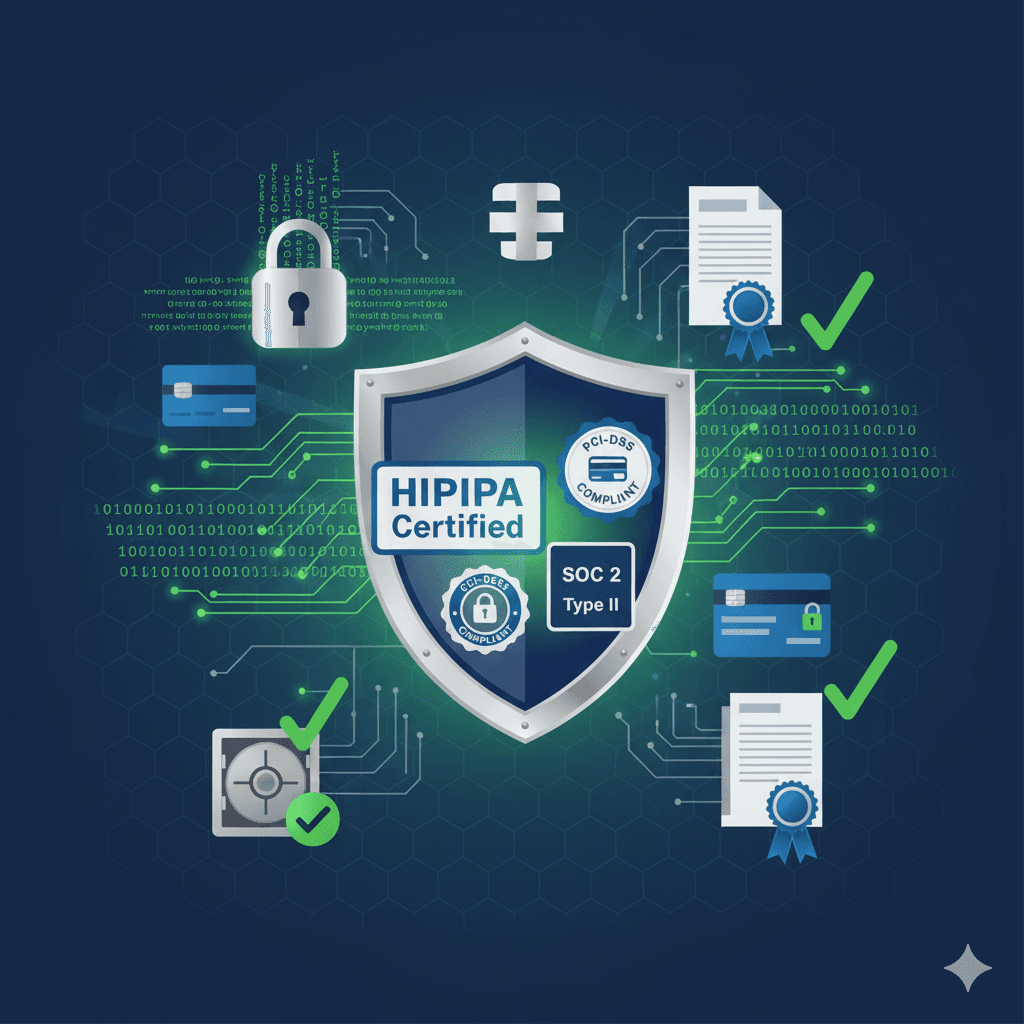
As AI voice agents become increasingly integrated into various industries, ensuring compliance with relevant regulations is no longer optional – it's a fundamental requirement. Non-compliance can lead to hefty fines, reputational damage, and erosion of customer trust. More importantly, compliance protects sensitive data and safeguards user privacy. This blog post delves into the critical compliance considerations for deploying AI voice agents, covering healthcare (HIPAA), payment processing (PCI-DSS), enterprise security (SOC 2), international data privacy (GDPR), and other industry-specific regulations.
HIPAA Compliance Deep-Dive (Healthcare)
For AI voice agents deployed in healthcare, HIPAA compliance is paramount. This ensures the privacy and security of Protected Health Information (PHI).
Business Associate Agreement (BAA) Requirements
If your AI voice agent vendor handles PHI on your behalf, a Business Associate Agreement (BAA) is mandatory. This agreement outlines the vendor's responsibilities to protect PHI as required by HIPAA.
Protected Health Information (PHI) Handling
AI voice agents must be designed to handle PHI securely. This includes proper access controls, encryption of data in transit and at rest, and secure storage.
Technical Safeguards (Encryption, Access Controls)
Encryption: All PHI transmitted or stored by the AI voice agent must be encrypted using industry-standard encryption protocols.
Access Controls: Implement strict access controls to limit who can access PHI. Role-based access control (RBAC) is highly recommended.
Administrative Safeguards (Policies, Training)
Develop and implement comprehensive policies and procedures for handling PHI. Regular training for personnel interacting with the AI voice agent is also crucial to ensure they understand and adhere to these policies.
Physical Safeguards (Data Center Security)
If your AI voice agent's infrastructure is hosted in a physical data center, ensure that the data center meets HIPAA's physical security requirements, including access controls, surveillance, and environmental controls.
Breach Notification Requirements
Establish a breach notification process in accordance with HIPAA regulations. This includes procedures for identifying, reporting, and mitigating security breaches involving PHI.
PCI-DSS Compliance (Payment Processing)
If your AI voice agent processes credit card payments, you must comply with the Payment Card Industry Data Security Standard (PCI-DSS).
Storing, Transmitting, and Processing Payment Card Data
Minimize the storage of payment card data. If storage is necessary, it must be encrypted and protected according to PCI-DSS requirements. Securely transmit cardholder data during payment processing.
Call Recording Compliance (PCI-DSS 3.2.1)
PCI-DSS 3.2.1 prohibits storing the sensitive authentication data (SAD), which includes the card verification value (CVV2) and the full track data. If you record calls involving payment card information, you must implement measures to ensure that SAD is not recorded or stored.
Tokenization and Data Masking
Utilize tokenization to replace sensitive cardholder data with non-sensitive tokens. Data masking can be used to obscure portions of the card number when displayed or used for reporting purposes.
Quarterly Vulnerability Scans and Penetration Testing
Conduct regular vulnerability scans and penetration testing to identify and address security vulnerabilities in your AI voice agent and its underlying infrastructure. This helps ensure the ongoing security of cardholder data.
SOC 2 Type II Compliance (Enterprise Security)
SOC 2 Type II compliance demonstrates a commitment to security, availability, and confidentiality. It's a valuable assurance for enterprise clients.
Trust Service Criteria (Security, Availability, Confidentiality)
SOC 2 compliance is based on the Trust Services Criteria (TSC). The most common are:
Security: Protecting systems and data from unauthorized access.
Availability: Ensuring systems are available for use as agreed upon.
Confidentiality: Protecting sensitive information from unauthorized disclosure.
Third-Party Audit Requirements
Achieving SOC 2 Type II compliance requires a third-party audit by a qualified auditor. The audit assesses the design and operating effectiveness of controls related to the TSC.
Continuous Monitoring and Reporting
Implement continuous monitoring to detect and respond to security incidents. Maintain comprehensive logs and reporting to demonstrate compliance and provide evidence for audits.
GDPR & International Data Privacy
If your AI voice agent processes data of individuals in the European Union (EU), you must comply with the General Data Protection Regulation (GDPR).
Data Residency Requirements
Understand the data residency requirements of GDPR. In some cases, you may need to ensure that data is stored and processed within the EU.
Right to Be Forgotten
Implement a mechanism for individuals to exercise their right to be forgotten, which requires you to erase their personal data upon request.
Consent Management for Voice Recordings
Obtain explicit consent before recording voice interactions. Provide clear and concise information about how the recordings will be used and how individuals can withdraw their consent.
Industry-Specific Regulations
Beyond general regulations, be aware of industry-specific regulations that may apply to your AI voice agent.
TCPA (Telephone Consumer Protection Act) for Outbound Calls
The TCPA governs outbound calls and text messages. Obtain consent before making automated calls and comply with restrictions on call times and content.
FINRA for Financial Services
Financial institutions must comply with FINRA regulations, which include requirements for record keeping, data security, and customer protection.
State-Specific Privacy Laws (CCPA, CPRA)
Be aware of state-specific privacy laws, such as the California Consumer Privacy Act (CCPA) and the California Privacy Rights Act (CPRA), which grant consumers specific rights regarding their personal information.
Compliance Checklist for Implementation
Identify applicable regulations.
Conduct a risk assessment.
Develop compliance policies and procedures.
Implement technical and administrative safeguards.
Train personnel on compliance requirements.
Monitor and audit compliance.
Establish a breach notification process.
Regularly update compliance measures to reflect changes in regulations and technology.
Common Compliance Questions from Legal and Compliance Officers
Legal and compliance officers often have questions regarding:
Data security and privacy measures.
Vendor management and due diligence.
Incident response planning.
Compliance with specific regulations (e.g., HIPAA, PCI-DSS, GDPR).
Audit and reporting requirements.
Audit Documentation and Reporting
Maintain comprehensive documentation to demonstrate compliance. This includes policies, procedures, training records, audit logs, and incident reports. Generate regular reports to monitor compliance and identify potential issues.
About ConversAI Labs Team
ConversAI Labs specializes in AI voice agents for customer-facing businesses.