
Featured Article
Compliance
Voice AI in Healthcare: A Compliance Guide
The integration of voice AI into healthcare offers exciting possibilities for improving patient care and streamlining operations. However, handling Protected Health Information (PHI) requires strict adherence to HIPAA regulations. Failure to comply can result in significant penalties, reputational damage, and compromised patient trust. This guide outlines the essential compliance requirements for implementing voice AI solutions within a healthcare setting.
HIPAA and Voice AI: Protecting PHI
The Health Insurance Portability and Accountability Act (HIPAA) establishes a national standard for protecting sensitive patient health information. Voice AI systems interacting with PHI, such as transcribing patient notes or scheduling appointments, must meet HIPAA's rigorous security and privacy standards. This applies to all aspects of the system, from data storage and transmission to user access and vendor relationships.
Technical Safeguards: Securing PHI in Voice AI Systems
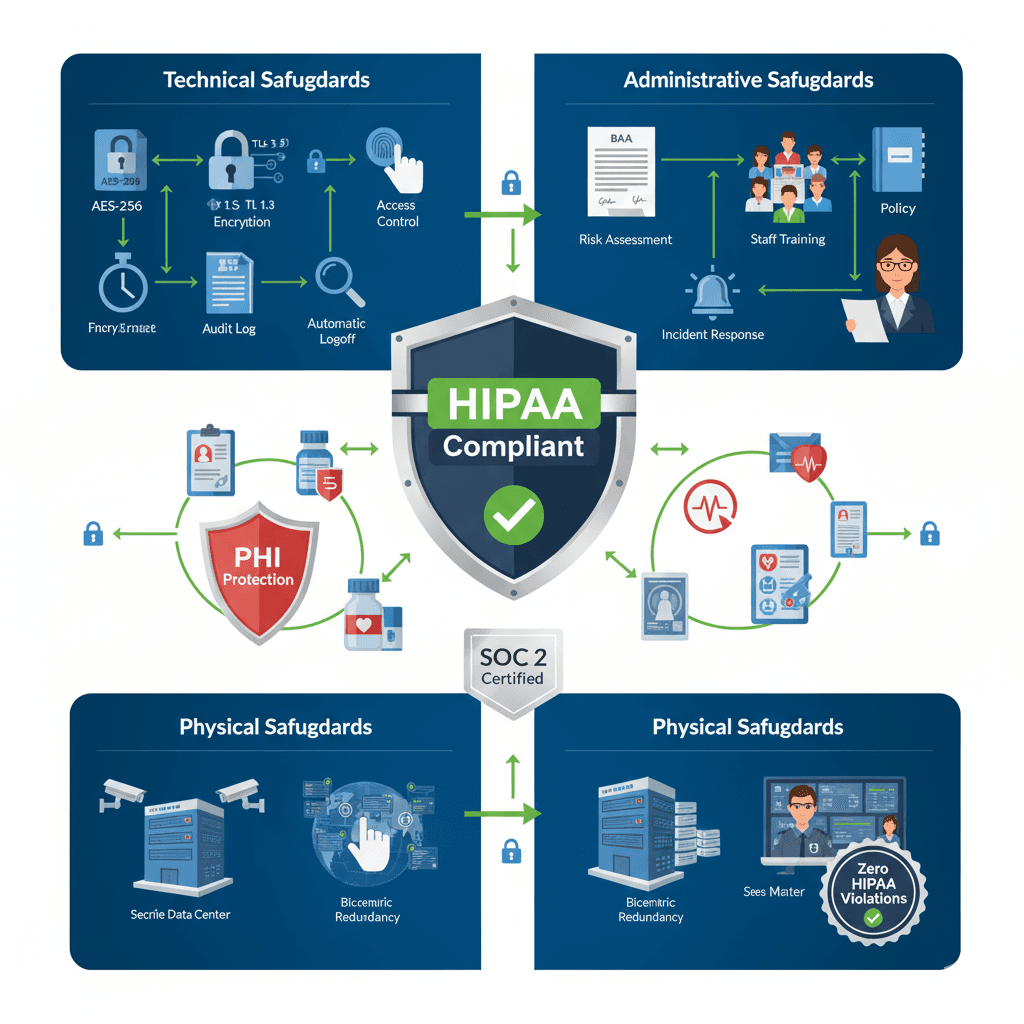
Technical safeguards are the cornerstone of HIPAA compliance for voice AI. They involve the technology and related policies and procedures used to protect electronic PHI. Key technical safeguards include:
Encryption at Rest: All stored PHI, including recordings and transcriptions, must be encrypted using Advanced Encryption Standard (AES) 256-bit encryption or higher.
Encryption in Transit: All PHI transmitted between systems and users must be encrypted using Transport Layer Security (TLS) 1.3 or a more secure protocol.
Role-Based Access Controls: Implement access controls based on user roles, granting access only to the PHI necessary for each role's responsibilities.
Multi-Factor Authentication (MFA): Enforce MFA for all users accessing systems containing PHI.
Audit Logging: Maintain comprehensive audit logs that track all access to PHI, including user identification, date, time, and the specific data accessed.
Automatic Session Timeouts: Configure automatic session timeouts to prevent unauthorized access to PHI on unattended devices.
HIPAA-Compliant Backup and Disaster Recovery: Implement robust backup and disaster recovery procedures to ensure PHI availability in the event of a system failure or disaster.
Administrative Safeguards: Policies and Procedures
Administrative safeguards focus on the organizational policies and procedures that protect PHI. These include:
Business Associate Agreement (BAA): A BAA is mandatory with any voice AI vendor that handles PHI. This agreement outlines the vendor's responsibilities for protecting PHI under HIPAA.
Annual Risk Assessments: Conduct regular risk assessments to identify potential vulnerabilities and threats to PHI security.
Risk Mitigation Plans: Develop and implement risk mitigation plans to address identified vulnerabilities and reduce the risk of PHI breaches.
HIPAA Training: Provide comprehensive HIPAA training to all voice AI users, covering privacy rules, security best practices, and incident reporting procedures.
Breach Notification Procedures: Establish clear breach notification procedures in compliance with HIPAA's 60-day notification requirement.
Documented Security Policies: Maintain well-documented security policies and procedures that are regularly reviewed and updated.
Physical Safeguards: Protecting Data Center Infrastructure
Physical safeguards address the physical security of the facilities and equipment that store and process PHI. This includes:
SOC 2 Type II Certified Data Centers: Utilize data centers that are SOC 2 Type II certified, demonstrating adherence to rigorous security and availability standards.
24/7 Monitoring: Implement 24/7 monitoring of data centers to detect and respond to security incidents.
Geographic Redundancy: Ensure geographic redundancy to maintain data availability in the event of a regional outage or disaster.
Facility Biometric Access: Restrict physical access to data centers through biometric authentication.
Encrypted Workstations: Use encrypted workstations for all employees handling PHI.
Vendor Responsibilities and Due Diligence
Choosing a HIPAA-compliant voice AI vendor is critical. Vendors should provide:
Signed Business Associate Agreement (BAA)
HIPAA certifications (SOC 2, HITRUST)
Comprehensive encryption documentation
Regular compliance reports
A detailed incident response plan
Common HIPAA Violations with Voice AI
Be aware of common pitfalls that can lead to HIPAA violations:
Unsecured PHI transmission (e.g., sending unencrypted data over email)
Lack of a BAA with the voice AI vendor
Inadequate access controls (e.g., allowing unauthorized users to access PHI)
Missing or incomplete audit logs
Using consumer-grade AI platforms that are not HIPAA compliant
Compliance Checklist for Voice AI in Healthcare
Ensure your voice AI implementation meets these essential requirements:
Signed Business Associate Agreement (BAA) with the vendor.
AES-256 encryption for PHI at rest.
TLS 1.3 encryption for PHI in transit.
Role-based access controls with MFA.
Comprehensive audit logging of PHI access.
Documented incident response plan.
Annual risk assessment and mitigation plan.
HIPAA training for all users.
Quarterly Compliance Verification
To maintain ongoing compliance, conduct quarterly verification procedures. This includes reviewing audit logs, testing access controls, verifying encryption configurations, and ensuring that all security policies are up-to-date. Consistent monitoring and verification are crucial for mitigating risk and protecting PHI in your voice AI environment.
About ConversAI Labs Team
ConversAI Labs specializes in AI voice agents for customer-facing businesses.